

HELLO SUMMER
Ahhhh— Light

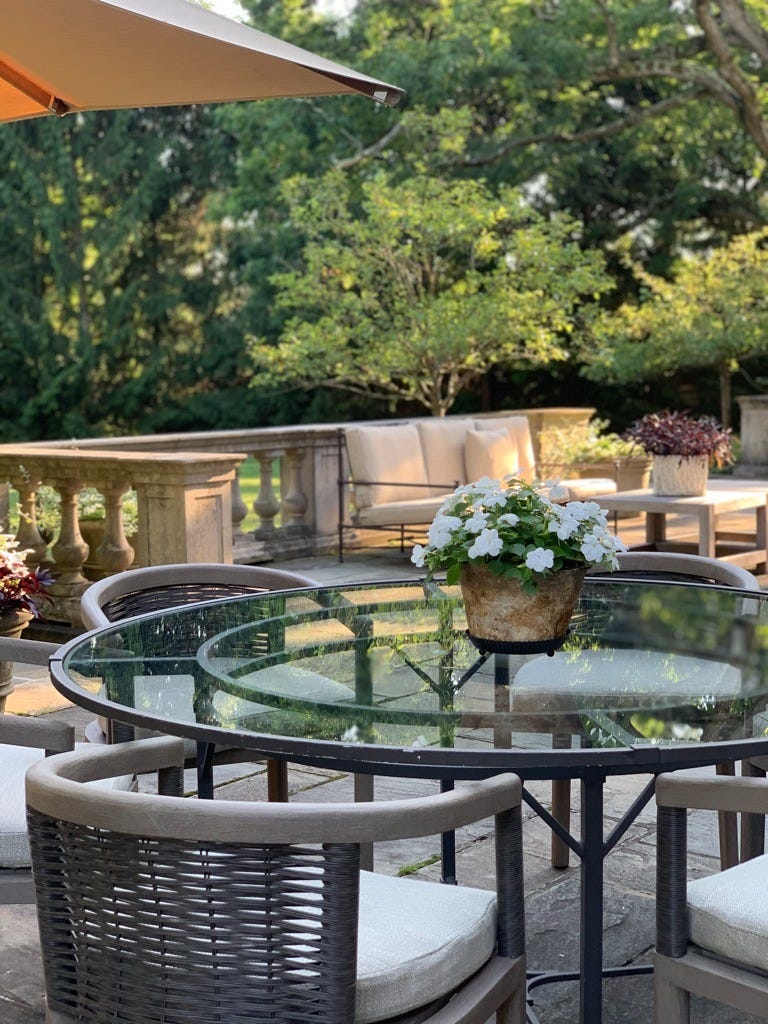
It turns out the winter blues aren’t for nothing. They’re very real, which is no news to you if you struggle with them.
While I’ve always believed they exist, I didn’t know quite how prevalent they were until I decided to write this article. Only then did I discover that one in five people experience shifts in mood, sleep, and motivation during the darker months. And get this–women are affected 3-4 times more than men. This also surprised me because the friends I know who struggle the most with seasonal shifts are men. Go figure.
Honestly, I'm surprised I don’t suffer more having lived in England for so many years. Maybe I’m an outlier because I’ve got to admit, I like weird weather. The more inclement or dramatic, the better. But there’s no doubt I’m very happy when summer rolls around.
Lucky for all of us, starting about now, it’s goodbye dark days and hello sunny ones, with summer’s long hours and glorious light ahead of us.
So bring on the sunshine!
I CAN SEE CLEARLY NOW
Eye Spy Feelings

Light is great for us in countless ways though I had no idea just how many until I began my design practice years ago. And wow—how far knowledge about light and lighting has come. And changed.
What we know today–the different varieties, quality, health benefits, and technologies around both natural and artificial light–is enough to blow your mind.
What I’ve come to learn is that it’s not just about the light. It’s about what it does to us. And recently, we’ve discovered it does a lot more than we thought. Researchers have identified that light has a direct pathway in your brain that runs directly from your retina to your brain’s serotonin center. And the path has nothing to do with vision. It serves one singular purpose: to convert the presence of light into an emotional state. It’s called the retinoraphe tract.
What’s wild is that your eyes are actually doing two jobs at any given moment. One is helping you see. The other is helping regulate mood, energy, focus, sleep, even hormones.
And summer light happens to be the most powerful time for this because we get more of it than any other time of year. The days are longer, the light is stronger, and our bodies respond accordingly.
This is part of the reason people often feel lighter, happier, more energized and social during the summer months. The body is literally receiving more signal through your eyes into its happy center.
Even more interesting? Morning light appears to be especially important. Researchers and sleep experts like Matthew Walker and Andrew Huberman have spoken extensively about how exposure to natural light during morning hours helps regulate mood, sleep cycles, cortisol, focus—all of these things for the entire day.
In other words: that morning walk, coffee outside, or summer sunrise isn’t just aesthetic. Your body is calibrating itself through light the entire time.
HELLO SUNSHINE
The Early Bird Gets The Worm
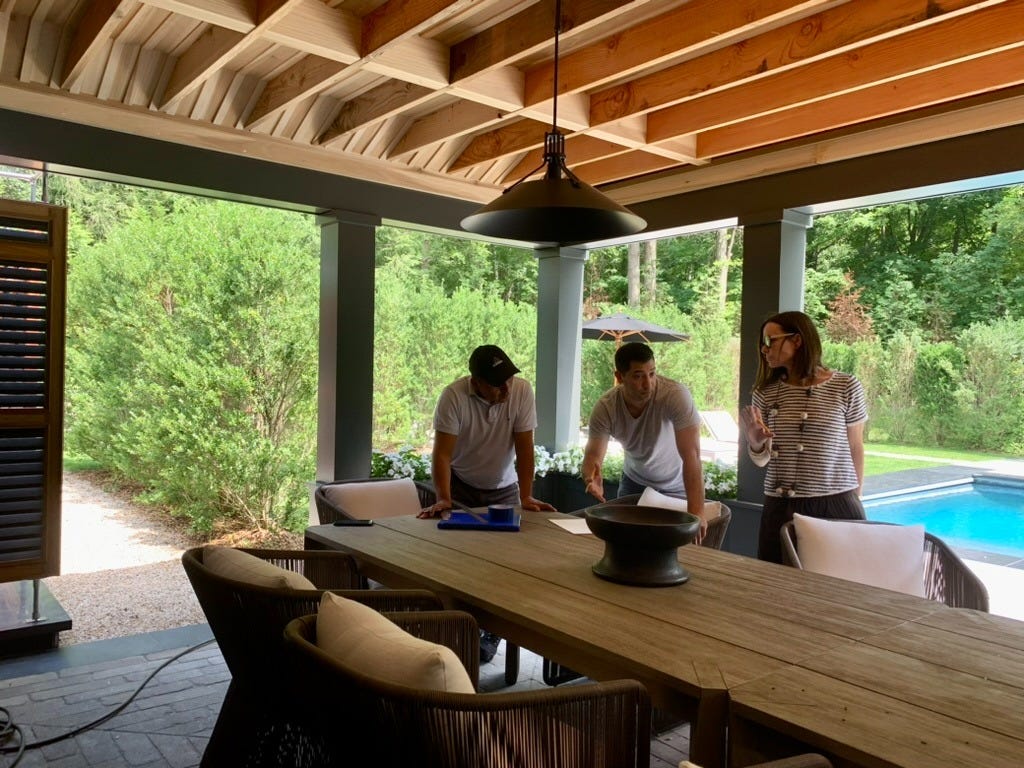
Morning matters.
Whether it’s work or play, the first hour of my day affects nearly everything that follows and I bet the same, whether you realize it or not, is true for you.
The body likes timing just as much as it likes light, and morning sunlight helps regulate that timing and our circadian rhythm—that’s our internal body clock which influences everything from sleep and hormones to focus, metabolism and mood.
And this is where things take a twist. Cortisol gets a bad rap. It’s the stress marker we usually want to avoid, but in the morning it’s incredibly important. We need it. The body naturally experiences a rise in cortisol within the first 30–45 minutes of waking. During this window, cortisol helps us wake up, sharpen focus, increase alertness and get our bodies moving properly for the day ahead. It likes regularity too.
Morning light helps amplify and regulate cortisol. Our bodies need a strong light signal early in the day to properly calibrate itself. Miss it consistently–especially by waking in dark rooms, keeping irregular hours, or moving straight to artificial indoor light–and the body will receive a much weaker signal.
This is part of the reason so many experts now suggest getting outside shortly after waking, even for just a few minutes. Andrew Huberman has spoken extensively about this too, calling morning light—his suggestion, a ten-minute minimum—one of the most powerful, natural tools we have for regulating sleep, mood and energy.
Light goes hand in hand with sleep and both have become things I really focus on. If I get a good night’s sleep (I’m slightly obsessed with my Oura ring and sleep score) and I get out the door in the morning for some sunlight too, it’s a great day. But realistically, that’s not typically what happens. For one, I live in a city and can’t simply walk out a back door. Secondly, while morning light is a priority, the first hour of my day flies and goes to other important tasks too.
The good news is you don’t have to step outside within the first hour of waking to benefit. You’re still very much in the window within the first two hours after rising. And if getting outside immediately isn’t realistic for you either, even standing near a bright window is better than nothing. Just know it’s less signal. Outdoor light is still considered best because the intensity is so much stronger.
Sunlight appears to be shaking off a little of its dangerous reputation too. It might actually be doing more for us than we once realized. That’s not to say sunscreen and timing aren’t serious considerations here, because everyone should be careful in the sun.
But beyond mood and circadian rhythm, researchers believe early light exposure helps trigger things like vitamin D production, nitric oxide release and even endorphins–which may partially explain why stepping into summer sunlight can create such an immediate sense of ease and well-being in the body.
This makes the classic summer morning–open windows, breakfast outside, watering the garden, even lingering on the patio a little longer–more important than we realized. Not only for mood, sleep and circadian rhythm, but possibly as one of the healthiest and gentlest ways to get natural, smaller amounts of sun exposure too since UV intensity is lower earlier in the day. It’s a great way to promote a little vitamin D production as long as you avoid the harsh mid and afternoon sun.
Rituals aren’t just charming. They’re biologically smart.
LESS LIGHT? NO WORRY.
Second Best
When you don’t have easy access to natural sunlight-–out your back door or during those dark winter months—here are a few of my key resources that explore the importance of light (including sleep’s relationship to it), with some alternative light options. There are some incredible emerging technologies.
BOOKS
Why We Sleep — Matthew Walker
Excellent on circadian rhythm, sleep timing and the relationship between light and the body clock.The Circadian Code — Dr. Satchin Panda
One of the best books on how light, meal timing and sleep affect metabolism and health.Protocols — Andrew Huberman
A broader performance and wellness guide, but includes extensive information on morning light, sleep and circadian health.
LIGHT THERAPY / DAYLIGHT LAMPS
Carex Day-Light Classic Plus
Recommended by Bryan Johnson and considered one of the gold standards for light therapy and circadian light exposure.Northern Light Technologies Boxelite
A medically respected daylight lamp frequently used for seasonal mood support.Circadian Optics Lumos
A more minimal, apartment-friendly version with a softer aesthetic.
One important note: while daylight lamps can absolutely help––natural outdoor light is still considered the gold standard because it delivers dramatically higher light intensity and a fuller spectrum of environmental cues.
MY PERSONAL OBSESSION WITH LIGHTS
Let Me Count The Ways
Lighting is singularly one of, if not the, most important architectural and interior design elements in any truly gorgeous interior. Period.
I could fill pages and multiple Substacks with all the gorgeous lights I’ve purchased for clients and myself over the years. Here are a handful of my favorites.
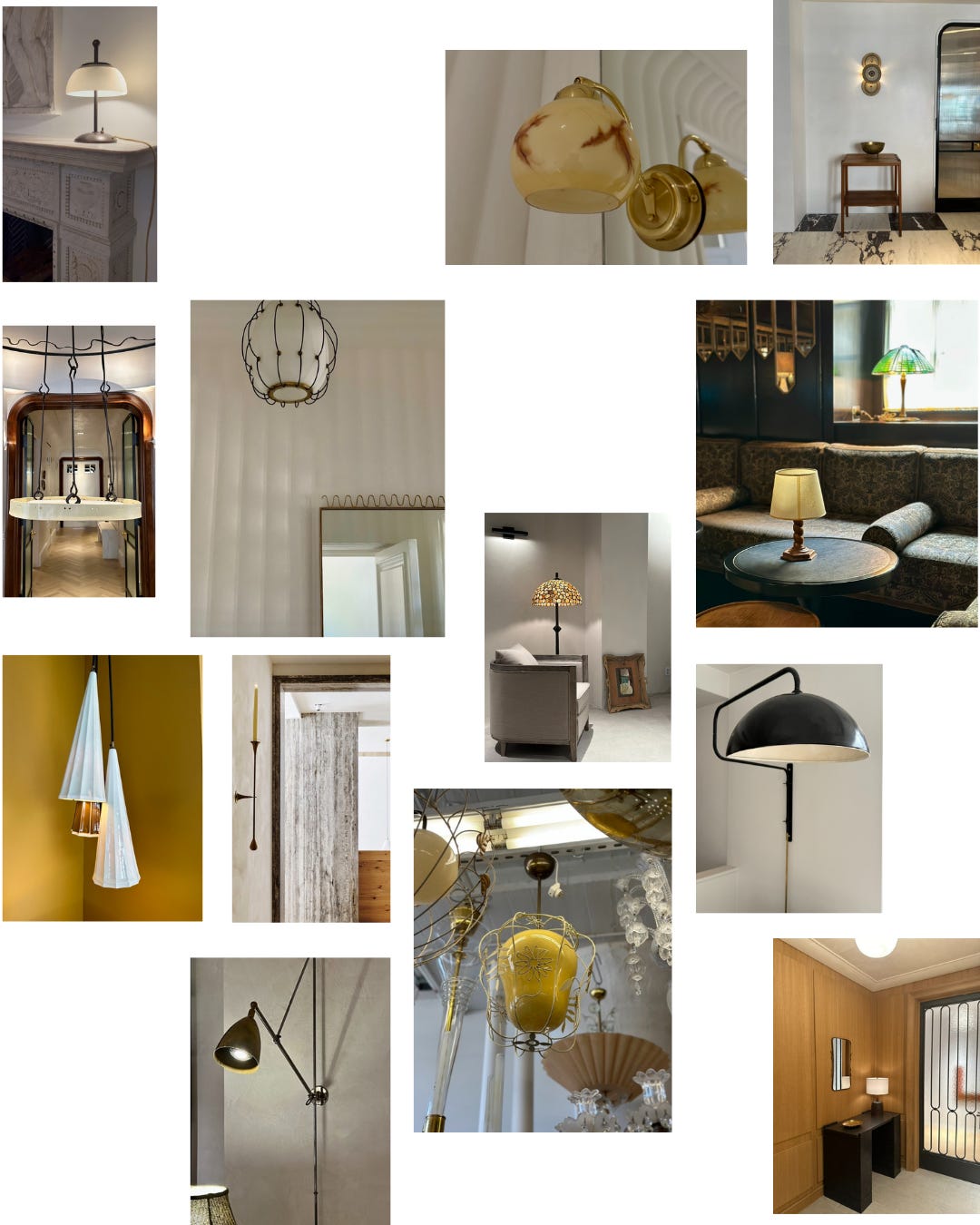
HOW I DESIGN FOR LIGHT
For Interest, Aesthetics, And Well Being
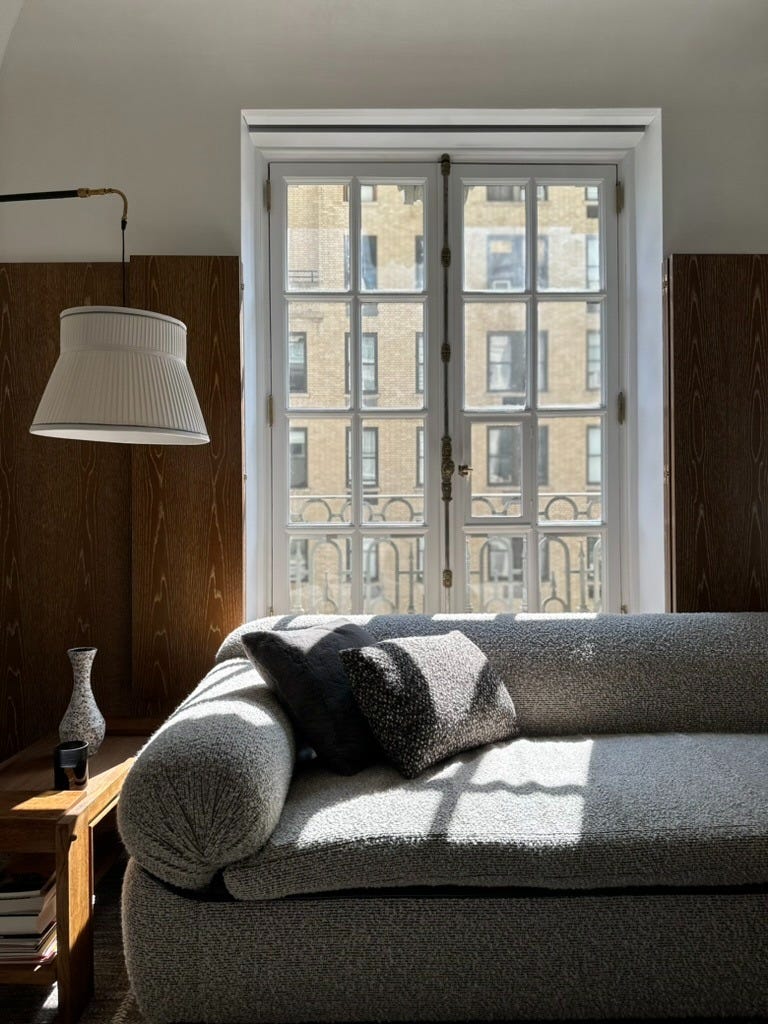
As someone who’s worked in design for years, I can tell you that I used to think about lighting almost entirely aesthetically. But no longer.
Lighting was and is my thing—it’s the interiors equivalent of shoes and sunglasses to me. There is no end to my obsession with good architectural lighting and every sort of light fixture–from lamps and pendants to sconces, candelabras, the full gamut.
I’ve collected hundreds, maybe even thousands, of lights of every shape, size and period over my career. Wherever I go, if there’s a vintage shop or architectural lighting dealer to be found, you’ll find me there.
This is why: when you see and respond positively to a space, whether it’s a beautiful home, elegant restaurant, luxurious store or nice hotel, chances are you’re responding to the lighting as much as any architectural detail, piece of furniture or art. Because without it, nothing would feel as vibrant. Liken it to any good stage set for a play or concert. Lighting is SUCH an enormous design factor.

While I always understood the impact of light in an interior, for years my focus was really more geared toward general lighting—how a lamp looked on a given surface. Was the design or scale right? Was the overall light in a room flattering?
But all that changed fifteen years ago when I began working with lighting designers. What I learned changed how I felt about design forever. Lighting for projects I undertook became core to the architecture and interior design plans for the home. And what a game changer it has been since.
The most important discovery in lighting design for me has been understanding that light affects far more than the aesthetics, or even the mood, of a room. It affects your mood too.
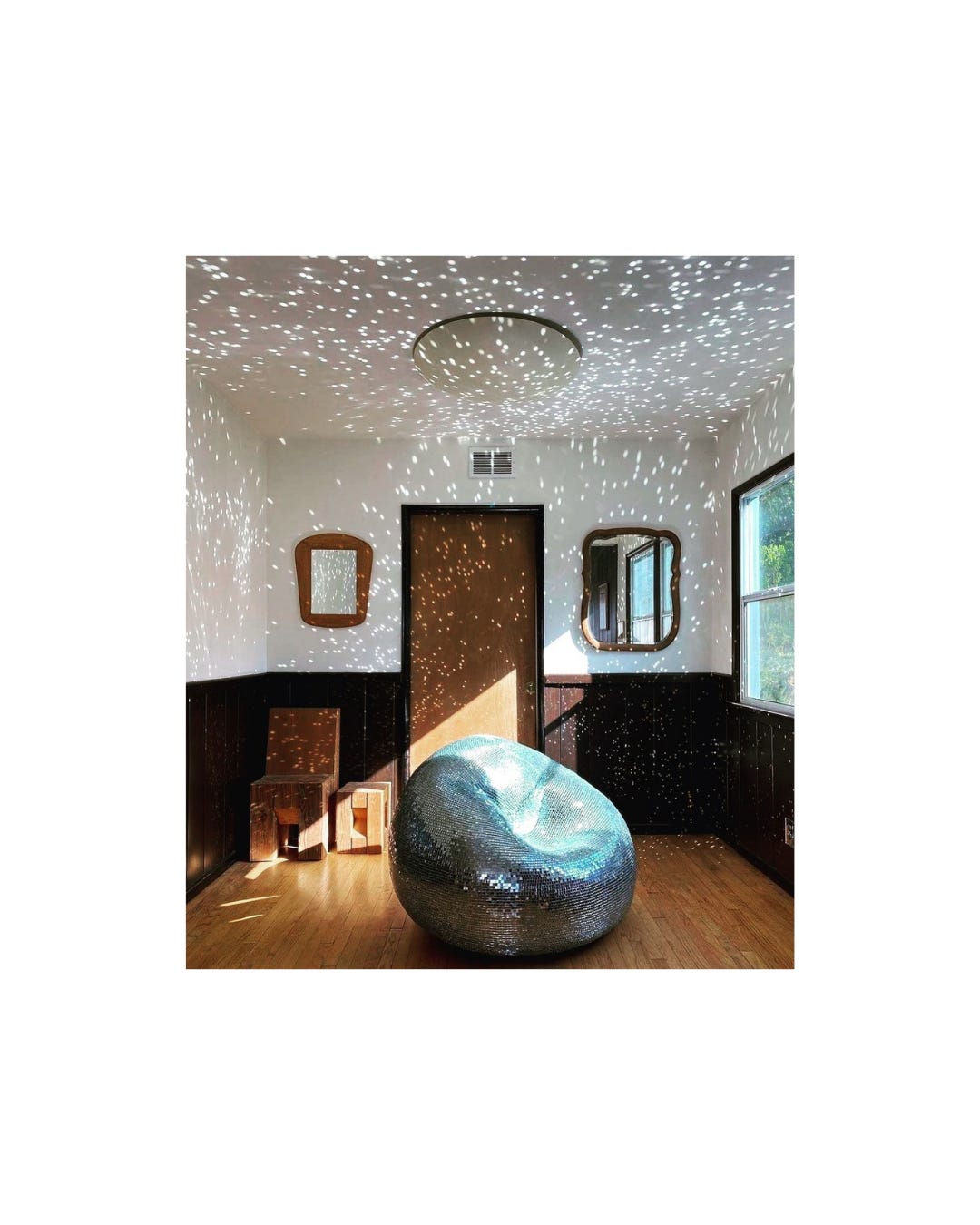
What the best lighting designers and environmental biologists know, and what I learned from them, is the biological effect lighting has on our bodies at any given point in the day. And that we respond differently to different kinds of light too.
Warm amber lighting at night signals to the body to begin winding down. Cooler, brighter, clean light during the morning and daytime hours helps increase mood and wakefulness.
This is where color temperature comes in.
Light is measured in increments called Kelvin. Lower Kelvin light–around 2700K–3000K–creates that warm, intimate glow we associate with beautiful residential interiors. Higher Kelvin lighting moves cooler and brighter, more closely resembling daylight to help stimulate alertness.
Kelvin goes higher too but beyond the level of 3500K–4000K, the light begins to feel colder, harsher, and more commercial or hospital-like. An example I know everyone can relate to: a poorly lit department store dressing room—all of these we instinctively recognize and recoil from the moment we walk in.
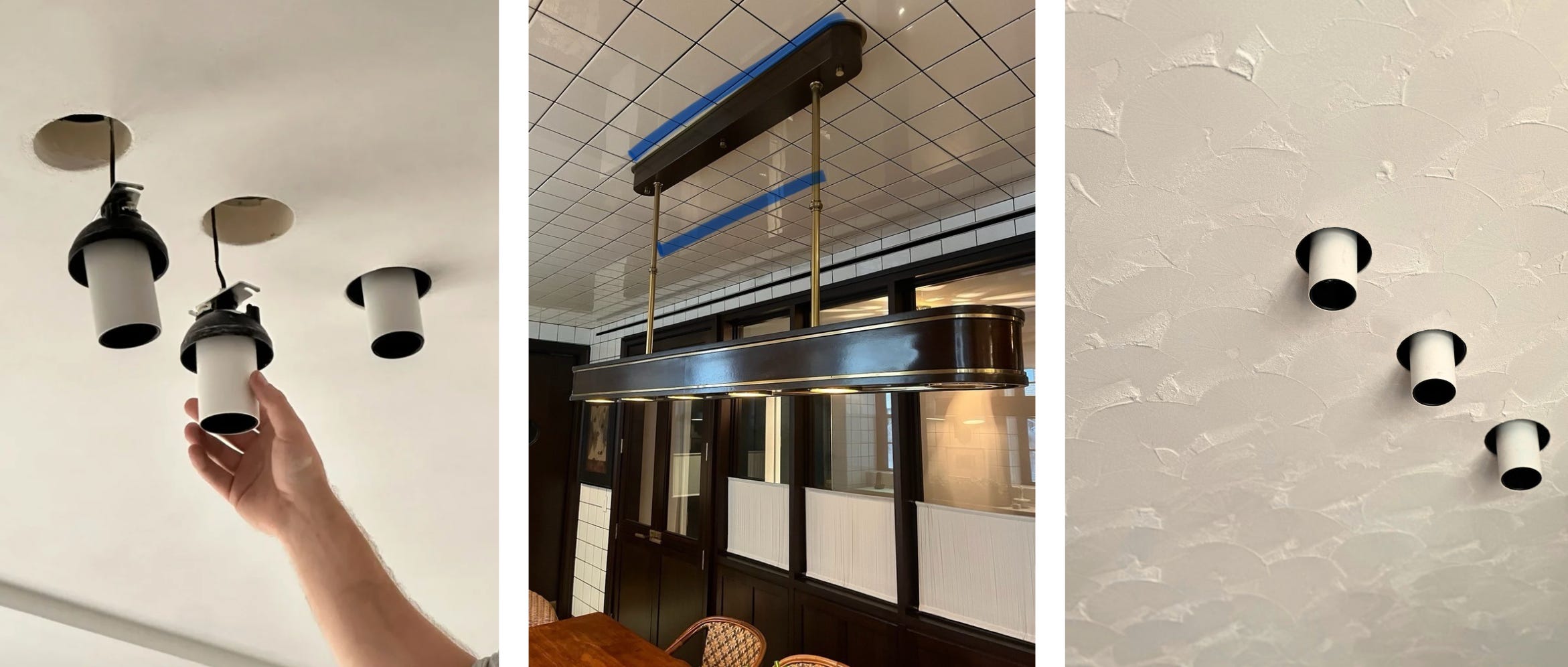
The art of great lighting is a craft. It isn’t meant to scream at you, but when you experience the beauty of a well-lit home–from how the art looks on a wall, where the pin light falls on a step, or the ease of good lighting when you’re reading in bed–it’s an entirely different experience. Your eyes open to a whole different level of awareness. You realize a home can be beautifully lit aesthetically while being biologically supportive at the exact same time.
It’s the complete opposite of days without natural or good lighting indoors under bad artificial lighting, staring at blue-lit screens. And then we wonder why we feel tired all day and crazy-alert at night. The body can’t properly distinguish morning from evening.
The bottom line is that nothing truly replicates natural daylight. But you’ve got to have good quality lighting at home to feel healthy and be healthy too. And there are some very good options out there.
While many in wellness still lean toward incandescent bulbs and lights for their broader spectrum benefits (it’s been shown to be healthier for you), they’re also softer and more biologically natural than many modern LEDs.
While LED technology has improved tremendously, quality matters enormously here. Some LEDs feel harsh and overly blue while others are designed to mimic warmer, more balanced light temperatures much more successfully.
Here are some of my favorite LED bulbs. In my opinion, these are the best facsimile of incandescent bulb lighting and last the longest:
BEST OVERALL/ CLOSEST TO INCANDESCENT
Philips Ultra Definition LED Bulbs
Probably the best balance of:
beautiful warm light,
high CRI,
low flicker,
affordability,
longevity,
and easy residential use.
These are widely praised because they avoid that harsh blue/green LED feeling.
Best for: everyday residential interiors.
Look for:
2700K
CRI 95+
“Warm Glow” or “Ultra Definition”
THE LIGHTING DESIGNER’S FAVORITE
Very loved in architecture/interior design circles.
Beautiful warm tone, high CRI, sculptural shapes, excellent dimming. Frequently referenced by lighting designers.
Best for:
decorative fixtures,
visible bulbs,
luxury residential lighting.
Their dim-to-warm technology is especially beautiful.
WELLNESS/CIRCADIAN/FULL SPECTRUM FAVORITES
Huge in the wellness/biohacking community.
Extremely high CRI, low flicker, very low blue spike, engineered to mimic incandescent/full-spectrum light more accurately.
These are more technical/expensive, but many lighting nerds consider them among the best LEDs made.
Best for:
bedrooms,
offices,
circadian-conscious homes.
Bottom line: there’s a bigger difference in quality than there is price for good bulbs, so it’s worth it to spend up. They’re longer lasting too.
This is all by way of saying, once I got educated about lighting, it entirely changed the way I think about architecting interiors.
When building or renovating, my team always aims for morning light in kitchens, cooler and brighter workspaces during the day, and warmer, softer pools of light strategically placed for evening. Before we ever finalize a decision about walls and rooms, I spend a good amount of time being in a space at different points in the day.
I swear this isn’t a plug, but for anyone reading this who’s still trying to figure out what I’m doing— or what Life Architecture is—it’s this. It’s all of it. The learning, the resources, the details I’ve picked up working with specialists in every field–from the best lighting designers and environmental biologists to sound, color and structural specialists.
Because design is so much more than surface pretty. It’s about how it makes us feel and how it affects our wellness. You’re going to continue to see these two merge more and more.
The best interiors don’t just look beautiful. They help us feel better too. And light is at the center of all of it.
YOUR BODY’S SUMMER CLOCK
How Light Changes The Way We Eat
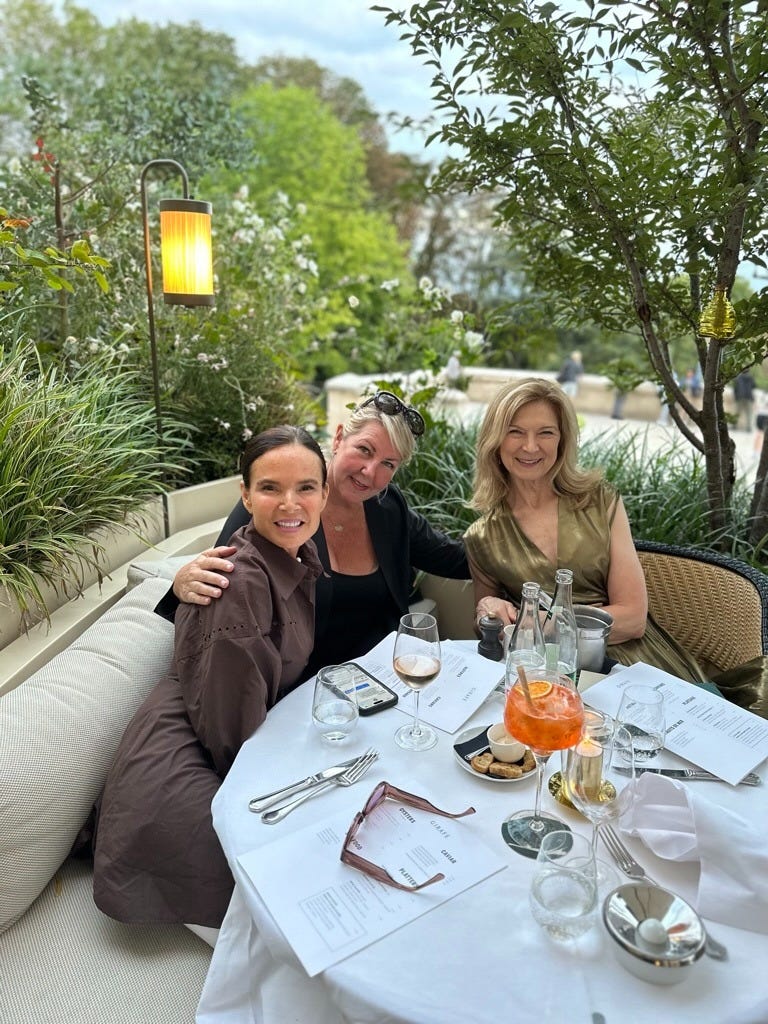
It turns out the body doesn’t just have one clock. It has many. Including around food and what and how we eat during warmer months.
While the brain responds primarily to light, other organs–like the liver, gut, pancreas and muscles–run on food timing. Researchers now refer to these as “peripheral clocks,” and when they fall out of sync with our main circadian rhythm, the body notices.
Which means when we eat matters.
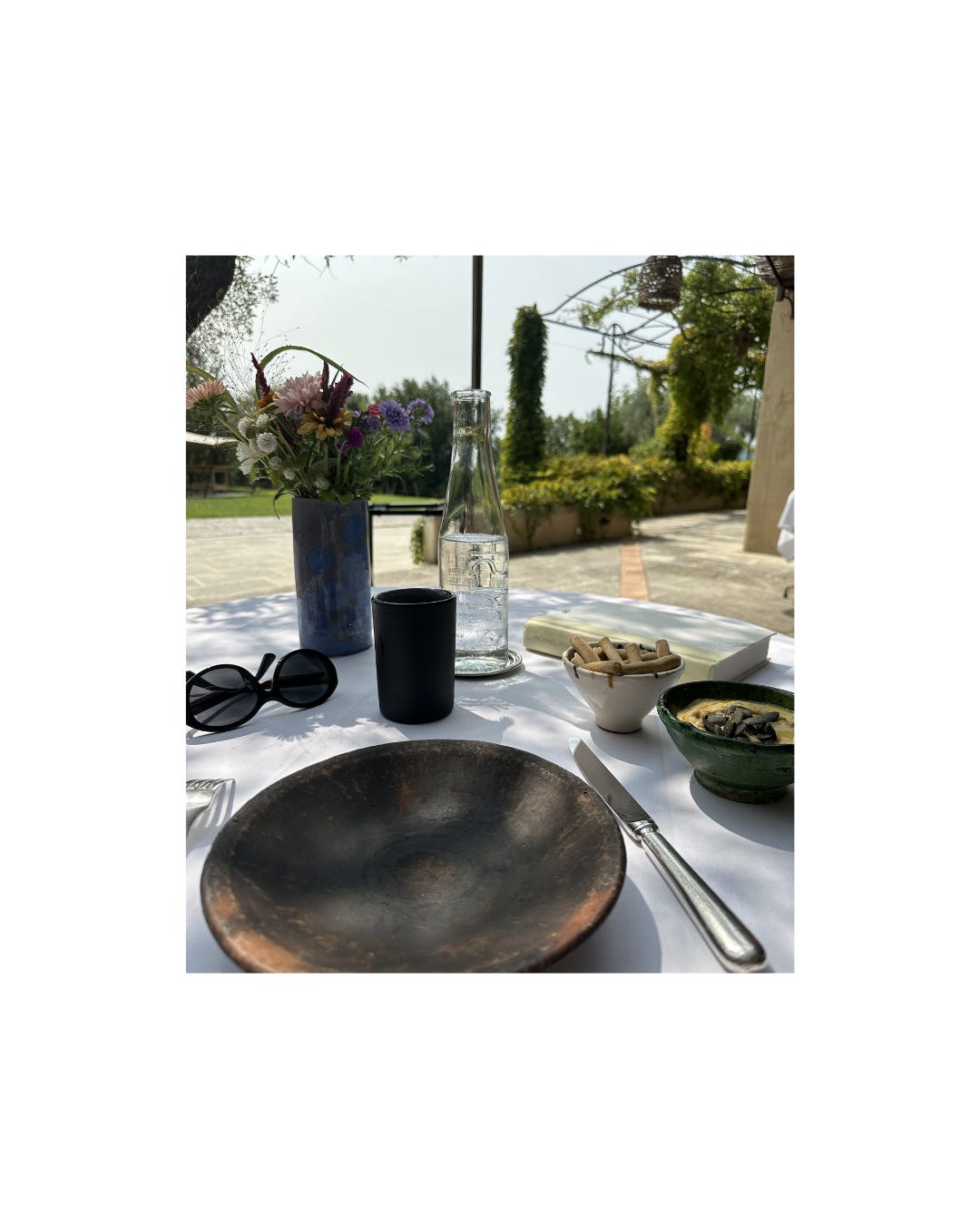
Late-night eating, irregular meal times, heavy dinners at 10 p.m. and beyond–though I sooo love late dinners in Spain and Italy–or eating under artificial light long after dark sends conflicting signals to the body. The brain may think it’s nighttime while the digestive system is being told it’s still midday. Researchers even have a term for this now: clock uncoupling (There appears to be a name for everything these days).
This may partially explain why eating late often feels different than eating earlier in the day. Sleep can feel disrupted. Energy can feel flatter. Digestion slower.
Summer, interestingly enough, naturally pulls many of us back toward a more biologically aligned rhythm. We wake earlier because of the light. We tend to move more. Lunches stretch longer. Dinner often becomes lighter and later sunsets keep us outdoors instead of under harsh artificial light.


There’s also something psychologically different about eating in summer. Food becomes brighter, fresher, lighter. Tomatoes. Berries. Stone fruit. Grilled vegetables. Olive oil. Those long lunches. Outdoor tables. Farmers markets. We aren’t just eating differently. We’re experiencing food very differently too.
Maybe this is another reason summer feels so good. Local, earthier foods–their ripeness, flavor and the experience of eating them this time of year–definitely inspire what I eat and cook. And the longer the day, the more energized I am to have easy food and refreshing beverages around all the time.
Here’s the easiest one of all: sun tea. No recipe feels more connected to summer light than this. It’s actually less a recipe and more a ritual in the South where I’m from. It couldn’t be simpler.
SUN TEA

INGREDIENTS
6–8 tea bags (black tea, green tea, mint tea or herbal all work)
2 quarts filtered water
Lemon slices, mint, peaches, berries, if desired
METHOD
Fill a large glass jar with water and tea bags. Cover and place outside in direct sunlight for 2–4 hours on a sunny, hot day, depending on the strength you like. Remove tea bags, refrigerate and serve over ice with lemon or fresh mint.
The tea slowly warms and brews through the heat of the sun itself. Southern grandmothers have known this for years. I think they knew long before we did that summertime rituals are good for us. They gently push us back toward a more natural rhythm the body already understands.
SUMMER STATE OF MIND
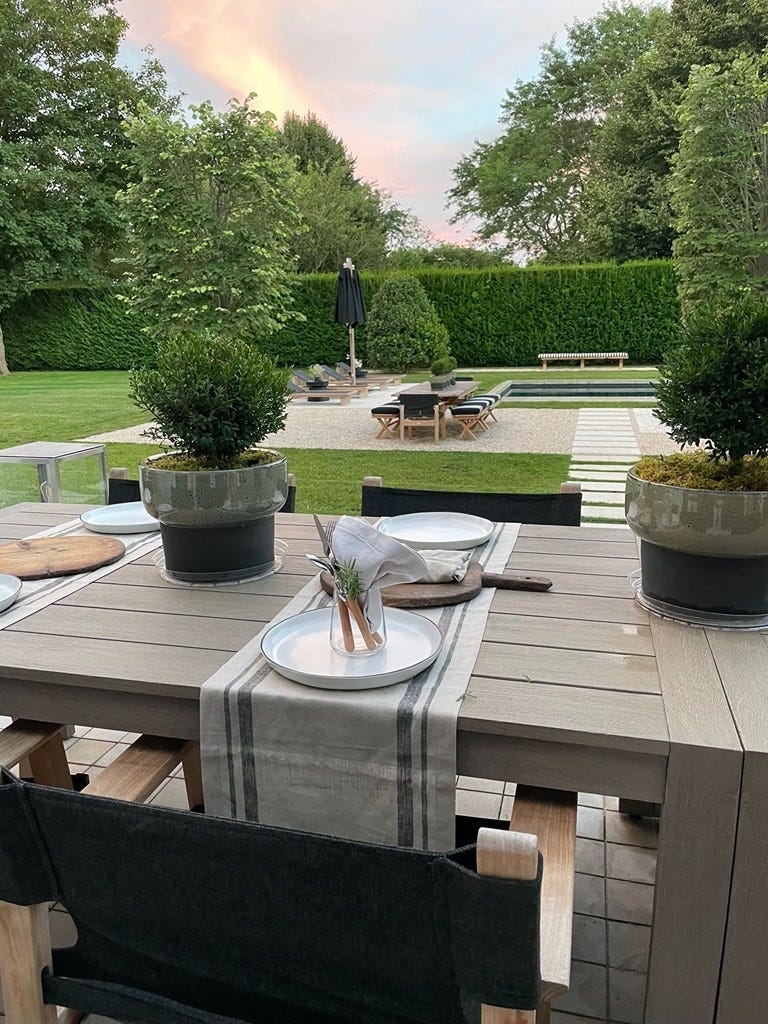
So now you know what a nerd I really am. Yep, I obsess over the smallest details, including light bulbs, that make our homes and our lives look and feel better.
My friends call me a life scientist that obsesses over how we live. I honestly don’t know if it’s a compliment or not–if emojis were handy here, I’d insert a laughing one–or if they just accept my nerdiness about home stuff.
And light–including summer light–how does it fit into all of this?
Well, it’s what we’re finally understanding about both. And it’s certainly not new. It’s what every civilization throughout history has known—and why summer was always celebrated in special ways. Solstice festivals. Harvest rituals. Long table gatherings outdoors. Entire calendars built around the return of light.
Because long before we understood serotonin, circadian rhythm, cortisol, the retinoraphe tract, peripheral clocks, clock uncoupling–or any of the other crazy names we humans love attaching to things–people already knew something far simpler: humans feel better in the light.
Perhaps that’s what this entire conversation really comes down to. Just remembering that we are biological creatures deeply affected by the environments we live in. And, light shapes more than we realize.
And why summer is such a welcome time of year. The body understands warmth and light long before the mind does. So over the coming months, open the windows. Eat outside. Take the walk. Sit in the morning sun a little longer. And enjoy every second of it.
Let the season begin.


I think you are brilliant. You are a your own beautiful light that offers much to many. thank you, kelly